
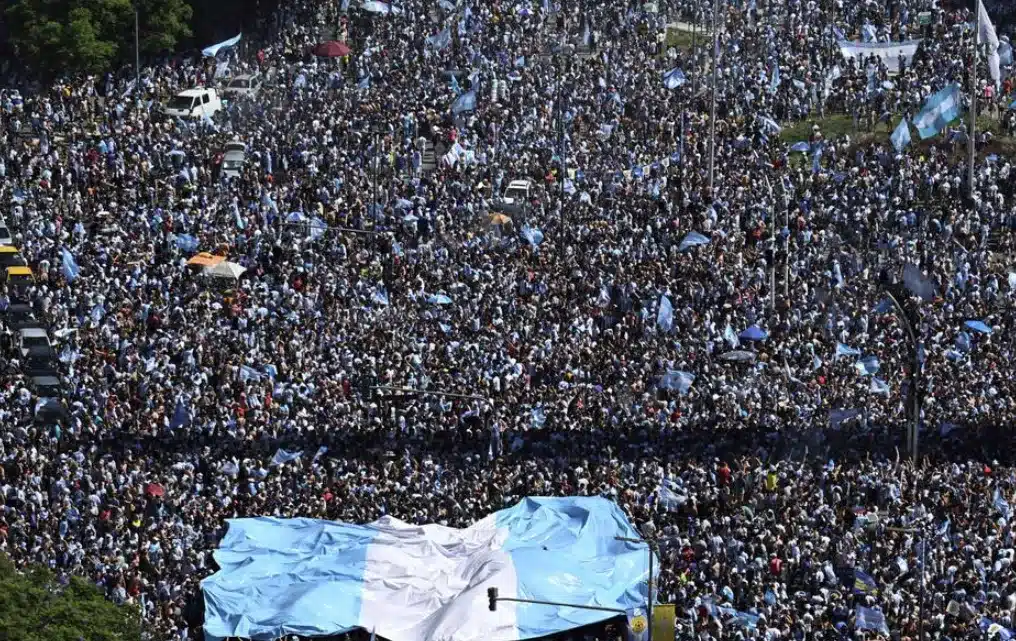
The streets of Buenos Aires erupted in a sea of blue and white as Argentina‘s World Cup-winning squad finally made their triumphant return home, bringing the FIFA World Cup trophy back to the nation after 36 long years. The emotional homecoming, which saw millions of fans line the routes from the airport to the capital, was a testament to the deep footballing passion that runs through the veins of every Argentine. This celebration was more than just a parade; it was a national catharsis, a moment of pure joy for a country that breathes and lives the beautiful game. According to football analyst Carlos Mendez, “This welcome is unprecedented in modern Argentine history. It shows how much this victory means to the identity of the nation.”
The Long-Awaited Homecoming
Arrival at Ezeiza International Airport
The journey home began when the Argentine national team touched down at Ezeiza International Airport in the early hours of the morning. The players, led by captain Lionel Messi and coach Lionel Scaloni, stepped off the plane to a hero’s welcome as hundreds of fans and airport staff gathered to catch a glimpse of the golden trophy. The atmosphere was electric, with chants of “Argentina, Argentina” echoing through the terminal as the squad made their way to the awaiting open-top bus. The players, still visibly tired from their marathon flight from Doha following their dramatic penalty shootout victory against France, were rejuvenated by the outpouring of love from their compatriots.
The Parade Through Buenos Aires
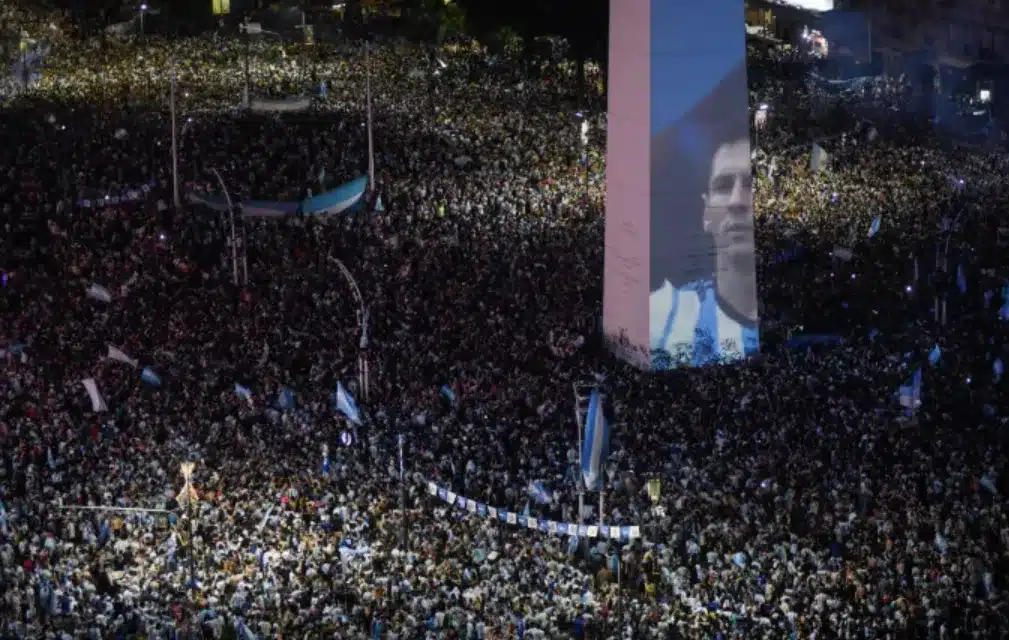
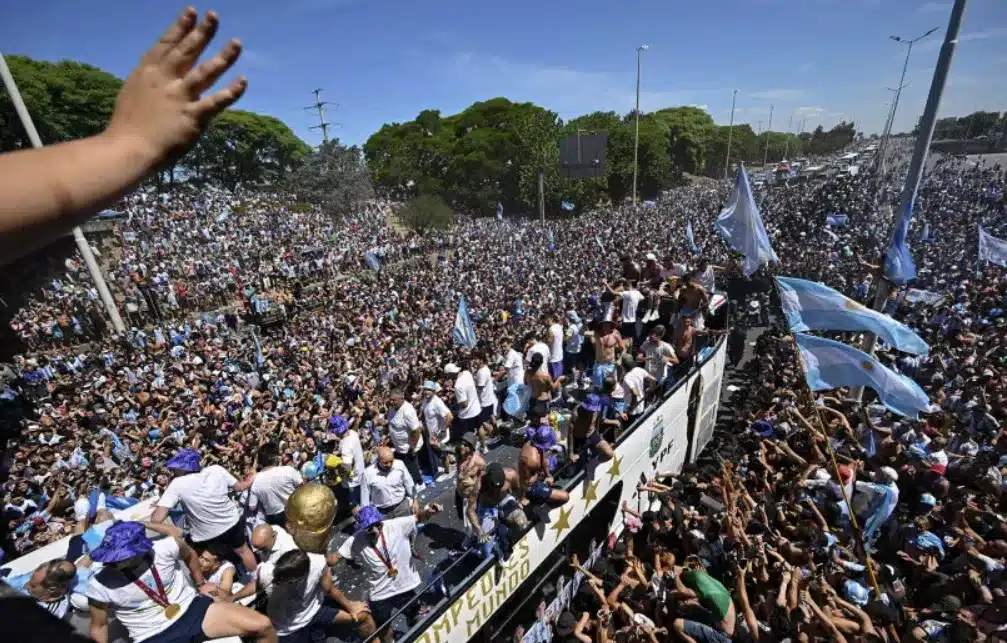
The open-top bus parade from the airport into the heart of Buenos Aires was nothing short of spectacular. An estimated 4 million people flooded the streets, creating a moving river of celebration that stretched for kilometers. Fans climbed trees, perched on traffic lights, and hung from balconies just to catch a glimpse of their heroes. The bus, decorated in the national colors and emblazoned with “Campeones del Mundo,” slowly made its way through the crowds as players held the trophy high for all to see. Lionel Messi, wearing sunglasses and a relaxed smile, waved to the masses while holding the trophy that had eluded him for so long, creating a moment that will be etched in the memory of every Argentine forever.
Key Moments from the Celebration
The Iconic Trophy Presentation
One of the most viral moments of the homecoming occurred when the players stopped the bus on the 9 de Julio Avenue, one of the widest avenues in the world. The team lined up with the trophy, and Messi, along with fellow legends Angel Di Maria and Paulo Dybala, held the World Cup up to the sky as fireworks exploded overhead. The image of the trio with the golden trophy against the Buenos Aires skyline quickly became an iconic symbol of this historic achievement. Sports psychologist Dr. Ana Rodriguez noted, “The symbolism here is profound. After years of near-misses and heartbreaks, the entire nation needed this moment of collective joy.”
The Helicopter Ride and Unexpected Challenges
As the parade progressed, the sheer volume of fans created logistical challenges that led to an unexpected change in plans. The open-top bus was forced to abandon its original route due to the massive crowds that made forward movement nearly impossible. In a truly Argentina-style solution, the team was airlifted by helicopter for a portion of the journey, allowing them to view the sea of humanity from above. This detour only added to the legend of the celebration, with players later describing the view from the helicopter as “surreal” and “unforgettable.” The Jeetbuzz sports community has highlighted this as one of the most unique victory celebrations in World Cup history.
The Global Impact of Argentina’s Victory
A Wake-up Call for World Football
Argentina‘s triumph has sent shockwaves through the international football community, with analysts around the world still dissecting the tactical brilliance of Lionel Scaloni’s squad. The team’s journey from a shock defeat to Saudi Arabia in their opening match to lifting the trophy has been described as one of the greatest redemption arcs in World Cup history. This victory has also reignited discussions about the legacy of Lionel Messi, with many now considering his claim to being the greatest player of all time as indisputable. The triumph has inspired a new generation of Argentine footballers and has shown the world the power of collective belief and resilience.
The Economic and Cultural Significance
The celebration in Buenos Aires was not just about football; it represented a moment of unity and joy for a country that has faced significant economic challenges in recent years. For a brief moment, the inflation rates, unemployment figures, and political divisions were forgotten as the nation came together to celebrate something pure and beautiful. The cultural impact of this victory will likely be felt for generations, with the 2022 World Cup being compared to the 1986 triumph led by Diego Maradona. Football analyst Ricardo Perez from Jeetbuzz commented, “This victory has created a new chapter in Argentine football folklore. It’s not just about winning; it’s about how they won and the characters who made it possible.”
Analysis of the Winning Squad
The Role of Lionel Messi
Lionel Messi’s performance throughout the tournament was nothing short of extraordinary. The captain scored seven goals and provided three assists, earning him the Golden Ball award as the tournament’s best player. His leadership on and off the pitch was crucial, particularly after the shock defeat to Saudi Arabia. Messi’s ability to unite the squad and carry the hopes of an entire nation on his shoulders has cemented his status as a national treasure. The image of Messi hoisting the World Cup trophy will forever replace the image of him walking past it in 2014, providing a redemptive arc that Hollywood scriptwriters could not have written better.
The Supporting Cast
While Messi rightfully received much of the spotlight, this victory was very much a team effort. Emiliano Martinez’s penalty shootout heroics against both Netherlands and France were instrumental. The emergence of young stars like Julian Alvarez and Enzo Fernandez, combined with the experience of Angel Di Maria (who scored in the final), created a perfect balance. The defensive resilience shown by Nicolas Otamendi and Cristian Romero, coupled with the tactical nous of Rodrigo De Paul in midfield, provided the foundation for Messi’s magic. Coach Lionel Scaloni deserves immense credit for creating a system that brought out the best in every player while maintaining a strong team identity.
Conclusion
The return of the Argentina World Cup winners to Buenos Aires for their hero welcome will forever be remembered as one of the greatest celebrations in football history. The images of millions of fans, the helicopter ride over the crowds, and the emotional sight of Lionel Messi holding the trophy above his head have already become part of football lore. This victory transcended sport, bringing joy to a nation that needed it most. As the confetti settles and the celebrations wind down, the legacy of this team will continue to inspire future generations of footballers and fans alike. We invite you to share your thoughts on Argentina’s historic victory and what it means to you in the comments below. For more in-depth analysis and coverage of the beautiful game, explore the latest articles and expert opinions available on our website.
