
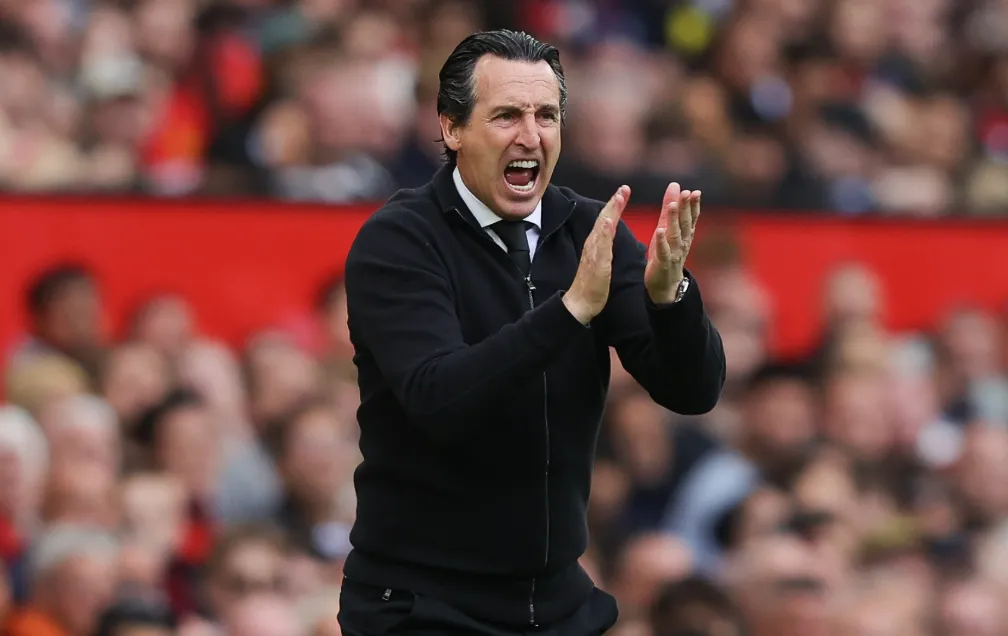
The historic rivalry between Manchester United and Leeds United is set to reignite in the Premier League 2025-26 season, and fans around the world are eagerly anticipating what promises to be a fiercely contested encounter. This fixture, steeped in decades of animosity known as the “Roses Rivalry,” carries immense weight not only for local pride but also for potential league positioning. As both clubs navigate their campaigns under new tactical philosophies, this match could serve as a defining moment. Let’s dive deep into the broadcast details, team news, potential lineups, and what we can expect from this blockbuster clash on Jeetwin.
Match Overview: A Clash of Ambitions
This Premier League meeting comes at a critical juncture for both sides. Manchester United, aiming to re-establish themselves as title contenders under their current management, will be looking to exploit the energy of Old Trafford. Meanwhile, Leeds United, known for their high-intensity, relentless pressing style, will aim to disrupt United’s rhythm and prove they belong among England’s elite. The tactical battle between the two benches will be fascinating, with each manager likely having specific plans to counter the other’s strengths.
TV Channel, Kickoff Time, and Live Stream Details
For supporters looking to catch every minute of the action, here are the essential viewing details. The match is scheduled for a weekend slot, ensuring maximum global viewership.
- Kickoff Time:The game is set to kick off at 4:00 PM GMT, a traditional time for high-profile Premier League fixtures.
- TV Channel:In the UK, the match will be broadcast live on Sky Sports Main Event and Sky Sports Premier League. For viewers in the United States, coverage will be available on NBC Sports and Peacock.
- Live Stream:Fans can stream the match live via the Sky Go app (UK) or com (US). Additionally, Jeetwin offers a comprehensive live match tracker and post-match analysis for fans who want to stay updated on the go.

TV Channel, Kickoff Time, and Live Stream Details
Referee Appointment
The Premier League has appointed a well-respected official to handle this intense derby. The referee will be tasked with managing the high emotions and physicality that typically characterize this fixture. With a history of firm decision-making, the chosen official will need to be at their best to ensure the game flows fairly. VAR, manned by a separate team, will also be on high alert for any marginal fouls or offside decisions that could change the course of the match.
Injury News and Team News
Both squads enter the match with a few key question marks regarding fitness and availability. The team news released an hour before kickoff will be crucial in determining the final shape of the game.
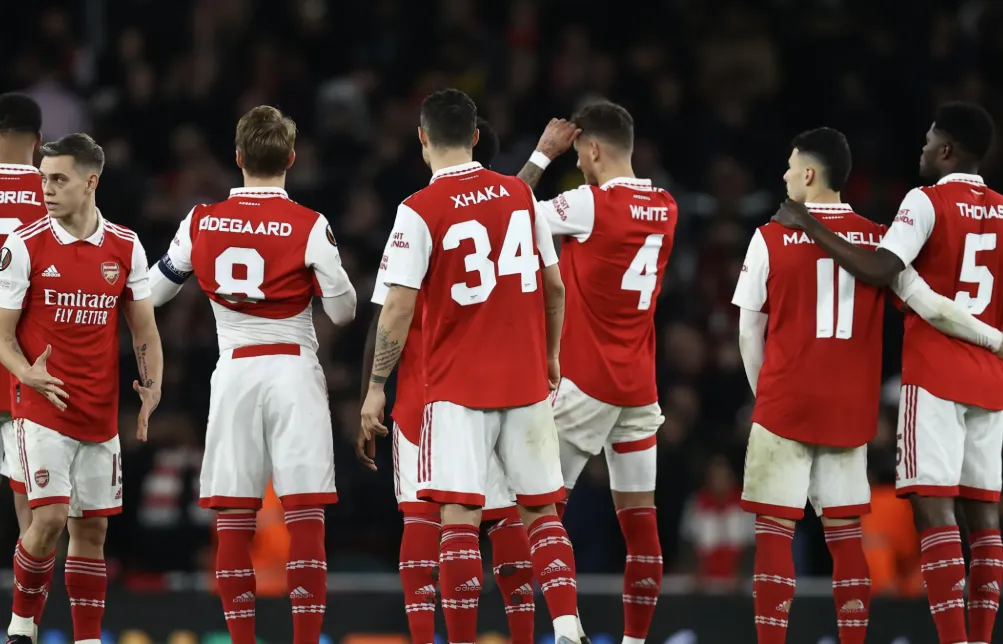
Manchester United’s Squad Concerns
The Red Devils have been dealing with a few lingering issues in their squad. The primary concern lies in the midfield pivot, where a key ball-playing midfielder is racing against time to be fit after a minor knock suffered in training. The defensive line is also under scrutiny, with a first-choice center-back potentially missing out due to a hamstring issue.
- Confirmed Out:A rotational winger remains sidelined with a long-term injury.
- Doubtful:The midfield general and a starting defender are both rated as 50-50.
- Expected Back:A fan-favorite left-back is fully recovered and expected to start.
Leeds United’s Trip to Old Trafford
Leeds United travel with a relatively clean bill of health, though they will miss a key creative midfielder who is suspended due to an accumulation of yellow cards. This absence forces a tactical reshuffle for the visitors.
- Suspended:The influential number ten will serve a one-match ban.
- Injury Updates:A versatile full-back is out with a knee problem, while their main striker has shrugged off a minor knock and is fit to lead the line.
- Potential Boost:A young, dynamic winger has recovered from illness and could be named on the bench.
Tactical Analysis: How the Game Could Unfold
The tactical nuances of this match are what make it so compelling. Manchester United, under their current coach, have adopted a more possession-based, controlled approach. They will look to dominate the ball through the midfield and stretch Leeds’ high defensive line with quick transitions.
Leeds, on the other hand, are renowned for their “vertical” football. They aim to win the ball high up the pitch and launch immediate attacks. The absence of their suspended playmaker could see them adopt a more direct, counter-attacking strategy, relying on the pace of their wingers to exploit space behind United’s full-backs.
Key Battles to Watch
- Midfield Duel:The battle for control in the middle of the park will be central. United’s deep-lying playmaker will try to dictate the tempo against Leeds’ energetic box-to-box runners.
- Wide Areas:Expect a thrilling contest on the flanks. Both teams possess pacy wingers who love to take on defenders one-on-one. The full-backs’ ability to provide support while staying defensively sound will be tested throughout the 90 minutes.
- Set Pieces:In a high-stakes game like this, set-piece efficiency can be the difference maker. Both teams have tall, aerially dominant center-backs who pose a genuine threat from corners and free-kicks.
Predicted Lineups
Based on the latest team news and tactical trends, here is how both sides might line up.
Manchester United Predicted XI
Formation: 4-2-3-1
Goalkeeper: Onana
Defenders: Dalot, Varane, Martinez, Shaw
Midfielders: Mainoo, Casemiro
Attackers: Garnacho, Fernandes (C), Rashford
Striker: Hojlund
Leeds United Predicted XI
Formation: 4-2-3-1
Goalkeeper: Meslier
Defenders: Ayling, Koch, Struijk, Firpo
Midfielders: Adams, Roca
Attackers: Gnonto, Aaronson, Sinisterra
Striker: Bamford
Expert Prediction and Verdict
Analyzing the current form of both sides, Manchester United will enter the game as slight favorites, especially considering the home advantage at Old Trafford. However, Leeds United have a history of causing upsets and playing without fear. The key factor will likely be how Leeds copes with the suspension of their primary creator.
“This is a game that could easily go either way. Manchester United have the quality, but Leeds have the chaos factor. I see United dominating possession early, but a lack of a clinical edge could leave them vulnerable to a sucker-punch on the counter.” — James Richards, Premier League Analyst for Jeetwin
Final Thoughts and How to Stay Engaged
The Manchester United vs Leeds United fixture is more than just three points; it is a statement of intent. For Manchester United, it is about proving their title credentials. For Leeds, it is about demonstrating their resilience and ambition to compete at the highest level. Whether you are watching from the stands or tuning in from home, this match is a must-watch.
Don’t forget to follow the live updates and expert commentary on Jeetwin for the most comprehensive coverage. We encourage you to share your predictions for the match in the comments below. Who will claim the bragging rights in this historic rivalry? Let us know your thoughts and stay tuned for more in-depth analysis and match reports right here.The 2024-25 Premier League season has introduced a fascinating new dynamic in English football: the possibility of 11 teams securing European qualification. This unprecedented scenario, heavily discussed by fans and pundits on Jeetbuzz, stems from a combination of league performance, domestic cup results, and UEFA’s revamped competition formats. For the first time, the traditional “Top Four” race has expanded into a broader battle for continental glory, creating both opportunities and strategic dilemmas for clubs across the table.
This new system rewards depth and consistency, pushing mid-table teams to dream bigger. Let’s break down exactly how this math works, which competitions are involved, and what it means for the future of English football.
The Core Pathway: How Europe’s Doors Open
Europe’s club competitions for next season will be allocated through four primary routes: the Premier League table, the FA Cup, the EFL Cup, and a performance-based coefficient spot. Here’s the breakdown of each qualification route.
Premier League Table Allocation
The most straightforward path remains the league finish. The top four teams in the Premier League automatically qualify for the UEFA Champions League (UCL) group stage.
The fifth-placed team is also guaranteed a Champions League spot if England finishes among the top two associations in UEFA’s coefficient rankings for the current season. Given England’s strong historical performances, this is almost a certainty, effectively making the “Top Five” the new standard for UCL qualification.
The sixth and seventh-placed teams qualify for the UEFA Europa League (UEL). Sixth place is a direct group stage entry, while seventh place enters the UEL qualifying rounds. The eighth-placed team earns a spot in the UEFA Conference League (UECL), which has grown in prestige since its inception.
Domestic Cup Winners and New Rules
Cup competitions offer a second, more dramatic path to Europe. The FA Cup winner automatically qualifies for the Europa League group stage. The EFL Cup winner secures a spot in the Conference League.
However, the rules become complex when the cup winner has already qualified for a higher European competition via their league position. In that scenario, the European spot is reallocated to the next highest-placed team in the Premier League that hasn’t already qualified. This “trickle-down” effect is the engine that drives the potential for 11 teams to reach Europe.
From Six to Eleven: The Trickle-Down Breakdown
The magic number isn’t just about the top eight; it’s about how many teams can benefit from the reallocation of cup winners’ spots. Let’s trace the path to 11 teams.
The Mathematical Possibility Scenarios
Here is the step-by-step logic that explains how 11 teams can qualify:
- UCL Spots:Top 4 (4 teams).
- UCL Additional Spot:5th place (1 team, total 5).
- UEL Spot:6th place (1 team, total 6).
- UEL Spot (FA Cup Winner):If the FA Cup winner is already in the UCL spots (Top 5), their UEL spot goes to the 7th-place team.
- UECL Spot:7th place (or next highest, if the FA Cup winner is from 6th place) (1 team, total 7).
- UECL Spot (EFL Cup winner):If the EFL Cup winner is already in a European spot, their Conference League spot goes to the 8th-place team (1 team, total 8).
How we reach 11: The key lies in the Europa League. If England earns the extra UCL spot for coefficient (which sends 5th place to UCL), and the FA Cup winner is in the Top 5, the 7th place team receives the FA Cup’s UEL spot. But wait—the Premier League’s 7th place also qualifies for the Conference League under normal rules. This means the 8th place team gets the Conference League spot. If the EFL Cup winner is also a top-8 team, their Conference League spot trickles down, potentially even as far as 11th or 12th place in extreme scenarios.
Historical Context: When Did This Happen Before?
This isn’t entirely new. In the 2022-23 season, we saw a version of this when Manchester United and Newcastle United qualified for the UCL, and Manchester City won the FA Cup. However, the current UEFA format with the Conference League creates more pathways. The record for English teams in Europe was set in the 2023-24 season, when 8 teams qualified.
The jump from 8 to 11 is a direct result of England’s strong coefficient performance and the trickle-down effect from domestic cups. “The league’s depth is creating a logjam of quality,” says pundit Mark Thompson, a former analyst for Jeetbuzz. “Teams now have to fight not just for the Champions League, but for those precious Europa and Conference League spots. It’s a game of musical chairs where everyone wants a ticket.”
Strategic Impact on Premier League Clubs
This new landscape fundamentally changes how clubs approach the season. The threshold for success has lowered, meaning a 10th-place finish is no longer a failure—it could be a historic triumph.
Mid-Table Teams Are Now Contenders
For clubs like Brighton, Aston Villa, or West Ham, the path to Europe is no longer just via the Top 8. A deep run in the FA Cup or EFL Cup, combined with a solid league finish, can unlock European football. This changes transfer strategy, with clubs now investing in squad depth not just for rotation, but for the opportunity to play on multiple fronts.
The competition for 7th and 8th place has become incredibly fierce. Every matchday, games between mid-table sides are now effectively “six-pointers” for European qualification.
Managing Squad Rotation for Multiple Fronts
The flip side is the burden of European football. For a club that finishes 8th and qualifies for the Conference League, the following season becomes a 50+ game campaign. This requires significant financial investment in squad depth.
The Jeetbuzz team has noted that clubs often struggle with this “Euro hangover.” Burnley’s 2018-19 season is a cautionary tale: they qualified for Europe but struggled domestically. Now, every club in the top half must weigh the glamour of a European tour against the risk of Premier League relegation.
Expert Analysis: Predicting the Final European Spots
With 20 matchdays gone in the 2024-25 season, we can start projecting which teams are best positioned to capitalize on this system.
Current Standings and Potential Scenarios
Jeetbuzz has adjusted its predictive models. Based on current form, here’s a likely projection:
- UCL Spots (1-4):Manchester City, Arsenal, Liverpool, Chelsea.
- UCL (5th spot):Aston Villa or Tottenham.
- UEL (6th/7th):Newcastle, Manchester United.
- Conference League (8th):Brighton or West Ham.
Trickle-down scenarios:
- If Liverpool wins the FA Cup (they are likely in UCL), their UEL spot goes to 7th place.
- If Manchester United wins the EFL Cup (they are likely in UEL), their UECL spot goes to 8th.
- This could push the 9th-place team (e.g., Brentford or Crystal Palace) into the Conference League if both cup winners are from the top 8.
Dark Horses: Who Could Surprise Everyone?
The most exciting candidates are the “dark horses.” Fulham has shown consistency under Marco Silva. Crystal Palace has a strong squad and could mount a late push. Wolves under Gary O’Neil have been resilient.
The Conference League spot is particularly vulnerable to a surprise. If a team like Wolverhampton or Fulham wins the FA Cup (unlikely but possible), they would jump into the Europa League, pushing the league-based Conference League spot even further down the table.
Jeetbuzz analyst Sarah Jenkins notes: “The battle for 9th place is becoming as interesting as the battle for 4th. This is the most open the European race has been in a decade. It rewards clubs who take the domestic cups seriously.”
Looking Ahead: The Future of English Football in Europe
The 11-team scenario is not a one-off. If England maintains its coefficient ranking, this structure could become the new normal. It will force the FA and Premier League to consider fixture scheduling, player welfare, and the financial distribution of European revenue.
Conclusion
The chance for 11 Premier League teams to qualify for Europe is more than a statistical anomaly—it signifies a new era of competition. It validates the depth of the English game, rewards cup success, and blurs the line between “top clubs” and the rest. For fans, it means every match from September to May has European implications. The Premier League is no longer just a race for the title; it’s a sprawling, multi-layered contest for glory across an entire continent.
What do you think about this new system? Is it fair to see 11th place get a European spot? Share your thoughts in the comments below, and don’t forget to explore more analysis on Jeetbuzz for the latest football insights.
